

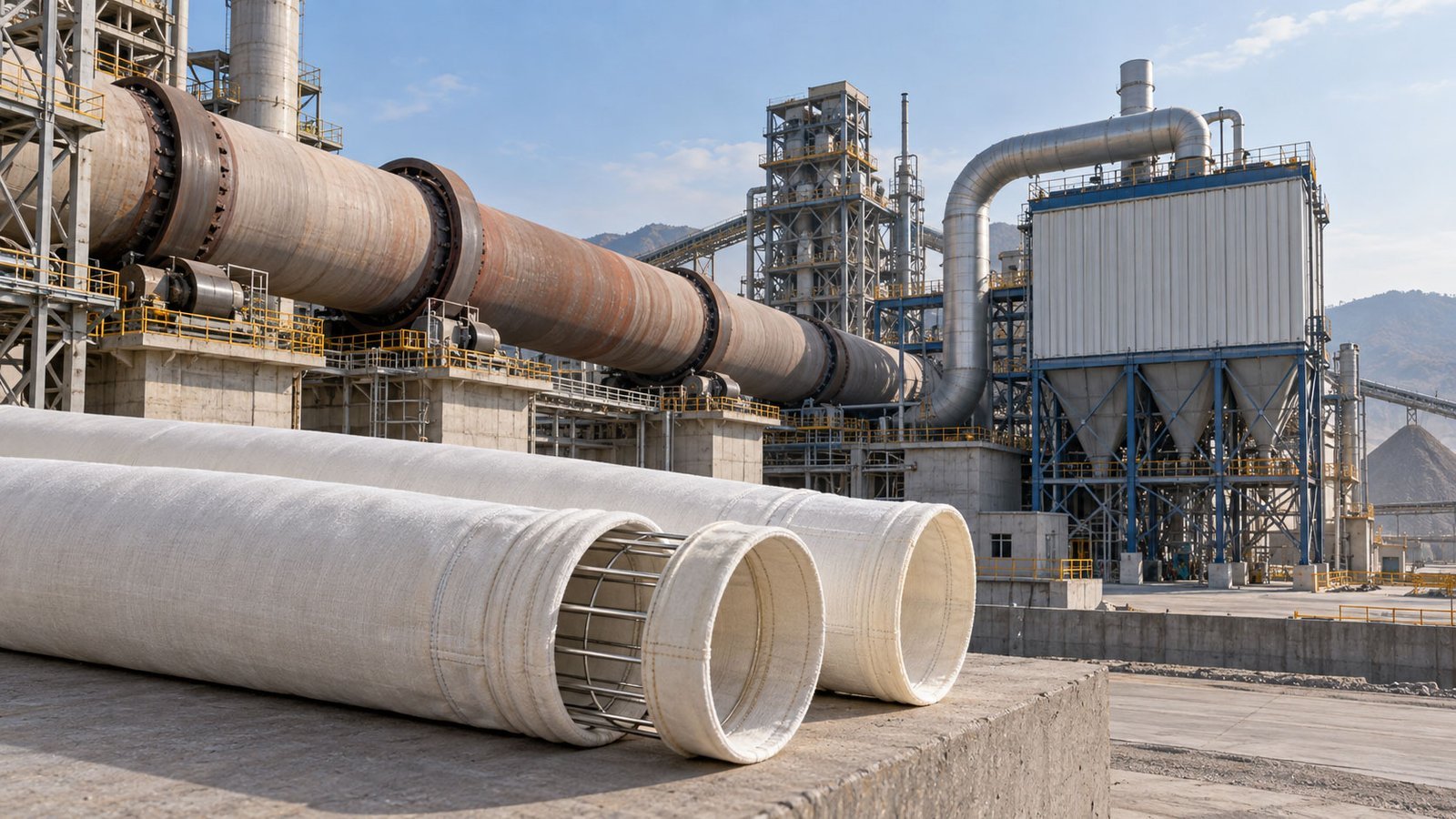
Filter Bag Selection for Rotary Kilns
A rotary kiln filter bag captures dust from kiln process gases in a baghouse filtration system. Selecting the right bag for these applications requires more than assessing the average gas temperature. Sudden temperature increases, abrasive dust and fuel-dependent changes in gas composition must be considered together.
Filter media suited to the operating conditions help control particulate emissions and support consistent filtration system operation. Selection should be based on actual measurements at the filter inlet rather than the kiln’s overall operating temperature.
Why do rotary kiln filter bags require application-specific selection?
Changes in combustion conditions and process transitions in rotary kilns can cause fluctuations in the temperature of the gas reaching the filtration system. Even when the continuous operating temperature is acceptable, repeated temperature peaks can shorten the service life of the filter material.
The type of fuel also affects filtration conditions. Natural gas, petroleum coke and different fuel blends can change the gas composition and the way dust adheres to the filter surface. The same filter bag should therefore not be assumed to deliver identical performance in plants using different fuels.
How should temperature and chemical resistance be assessed?
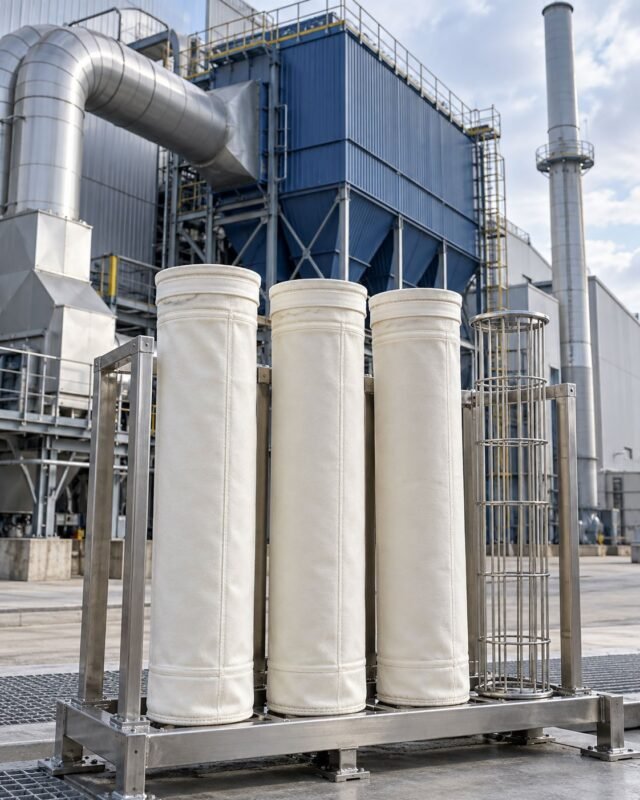
The continuous temperature limit and the short-term peak temperature limit of the filter media must be checked separately. The duration and frequency of temperature peaks are also decisive selection factors. Moisture, oxygen and chemical constituents should be assessed alongside the temperature resistance of the fibre material.
A material with high temperature resistance may not be suitable for every gas composition. Final selection should be made by comparing the manufacturer’s product specifications with the plant’s measured process conditions.
Surface properties for abrasive and sticky dust
High dust loads and abrasive particles can cause mechanical wear on the bag surface. The bag’s structural strength, gas distribution and compatibility with the support cage are therefore important. Where dust is sticky, the accumulated surface layer must be removable to prevent persistent clogging.
Depending on the application, fine-fibre filter media or membrane surfaces may be considered. When selecting a membrane product, surface integrity and coating durability should also be checked. A given surface treatment will not produce the same result with every type of dust.
Filtration velocity and emission targets
Filtration velocity, filter area and gas flow rate should be assessed together. For processes with high dust loads, fine particles or dust that is difficult to remove, the system design must accommodate these conditions. The outlet emission target should also be established according to the plant’s project requirements.
- Determine the continuous and peak gas temperatures at the filter inlet.
- Examine the dust load, particle characteristics and tendency to adhere.
- Assess gas moisture and chemical composition.
- Check bag dimensions, the support cage and the cleaning system.
- Select filter area and media suited to the target outlet emissions.
Considering these factors together when selecting rotary kiln filter bags helps improve bag life and system performance. For further selection criteria in cement processes, see our article on filter bag selection for cement plants.