


Filter Bags and Dust Control in Asphalt Production
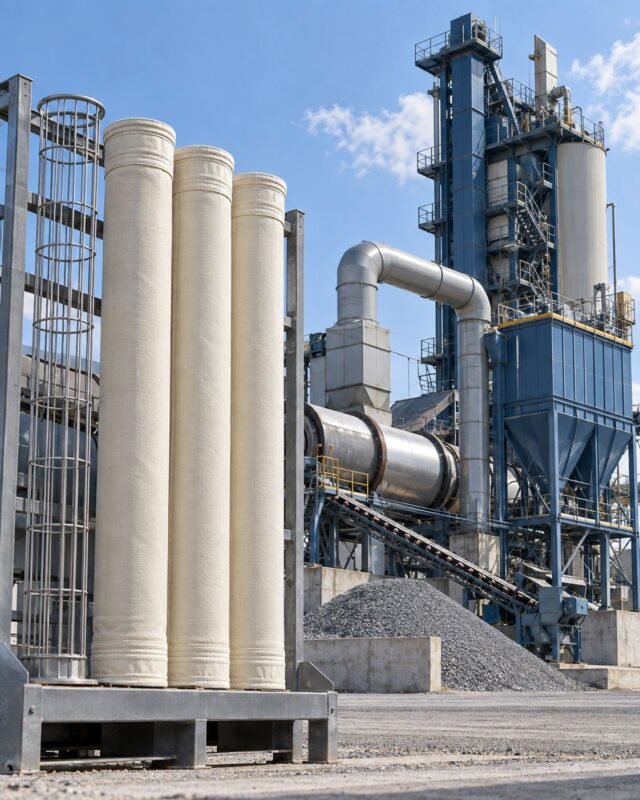 Filter bags in asphalt production are essential components of baghouse systems used to capture mineral dust generated during production. Dust characteristics vary between aggregate preparation, drying, conveying and mixing stages. Filter selection should be based on these characteristics and the gas temperature.
An appropriate dust collection and filtration system helps reduce particulate emissions, protect equipment and control dust in the production area. This requires not only suitable bag material but also collection at the dust source and consistent system operation.
Main dust sources in asphalt plants
Aggregate processing and conveying: Friction and impact during crushing, screening and conveying generate mineral dust. The gas stream from the drying drum should be assessed separately for temperature and dust load.
Heating and mixing: Fine particles and fumes may form when hot aggregate and bitumen are processed. Sticky or oily constituents in the stream can make the filter surface more difficult to clean.
Mineral filler feeding: Fine dust may become airborne during filler storage, weighing and feeding. Dust at these points must be collected appropriately.
Discharge and loading: Dust and fumes generated during the transfer of hot mix should be addressed within the plant’s ventilation and collection arrangements.
How are filter bags selected for asphalt production?
When selecting filter media, continuous gas temperature, short-term temperature peaks, dust abrasiveness and surface adhesion should be assessed together. The bag’s mechanical strength, dimensions and compatibility with the cleaning system also affect performance.
- Polyester: May be considered for applications where temperature and other gas conditions remain within the product’s technical limits. It should not automatically be regarded as suitable for high-temperature gas streams.
- Meta-aramid: One of the options considered for hot gas applications. Compatibility with moisture and the gas’s chemical composition should also be checked.
- P84: A filter medium that may be considered for high-temperature applications. Final suitability should be determined by comparing product specifications with process conditions.
The material name alone is insufficient for selection. Fibre structure, supporting scrim and surface treatments should also be assessed. Cleaning behaviour is particularly important in gas streams containing sticky dust.
Operational benefits of dust filtration
Effective particle capture helps a plant meet its specified emission targets. Collecting dust at the appropriate point can also help manage accumulation and wear in fans and ductwork.
Collected mineral dust may be considered for reuse where the plant’s product quality conditions and process requirements allow it. The suitability of recovery should be determined from the dust composition and the requirements of the asphalt mix.
What should be checked during filtration system maintenance?
Changes in differential pressure, bag damage and operation of the cleaning system should be monitored regularly. If sealing problems or persistent surface deposits are observed, the underlying cause should be investigated rather than simply replacing the bag.
When filter bags in asphalt production are selected using process data and checked regularly, they help the dust control system operate more consistently.