

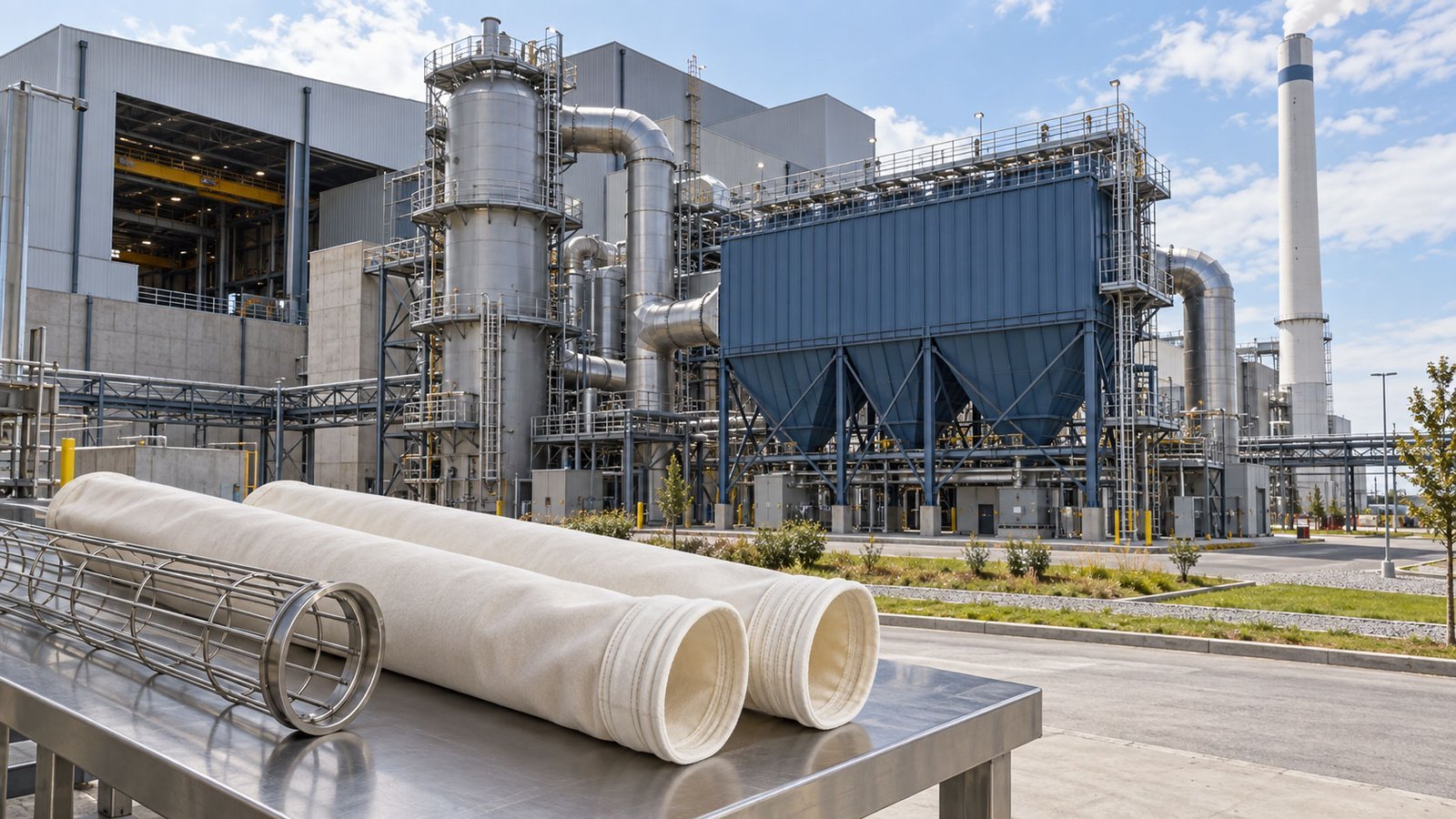
Filter Bag Selection for Waste Incineration Plants
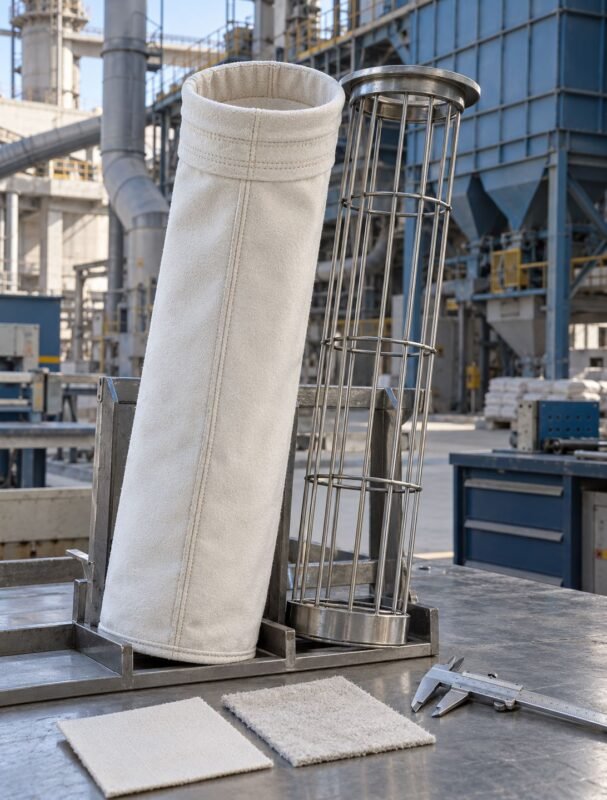 Waste incineration filter bags are important components of baghouse systems used to capture particles from flue gas. Filter media for these plants should be selected with consideration of gas temperature, moisture, chemical composition and dust characteristics.
The combustion chamber temperature is not the same as the baghouse inlet temperature. Filter bag suitability should be assessed against the actual conditions reached at the filter inlet after the gas has passed through the treatment line. Material selection is therefore based directly on the environment to which the bag is exposed.
What do waste incineration filter bags capture?
Baghouse filters are used to capture solid particles in flue gas and constituents associated with those particles. Fine particle capture depends on filter media structure and system operating conditions.
A filter bag alone should not be regarded as a solution for removing every gas-phase pollutant. Control of acidic gases and other pollutants should be addressed within the plant’s complete flue gas treatment system. Particulate filtration and gas treatment serve different functions.
Temperature and chemical resistance
Continuous gas temperature and short-term peak temperatures should be examined separately. Not all filter materials can be assumed to operate within the same temperature range. The product’s permitted operating limits should be compared with actual process data.
Acidic constituents, oxygen and moisture in the gas stream can affect filter material durability. Chemical resistance should not be determined by considering only one gas constituent; it must be assessed together with temperature and exposure conditions.
Which filter materials may be considered?
- PPS: May be considered for applications where chemical resistance is important. Product limits should be checked for temperature and oxidising gas conditions.
- P84: One of the options considered for high-temperature applications. Compatibility with gas composition and moisture should also be examined.
- PTFE: May be considered for processes with demanding chemical resistance requirements. Selection should still be based on the product’s technical data.
- Glass fibre: May be considered for hot gas applications. Mechanical stress and compatibility with the cleaning system should be taken into account.
- Meta-aramid: May be considered for gas streams with suitable temperature and gas conditions. It is not a universal solution for every waste incineration process.
Selecting any of these materials solely by its name or temperature resistance is insufficient. Fibre and support structure, surface treatments and the bag’s compatibility with the system should be examined together.
Fine particles and surface properties
Filter media fibre structure and, where necessary, membrane surface options may be considered for fine particle capture. Achieving the target performance also requires appropriate filter area, sealing and a suitable cleaning arrangement.
Regular removal of the surface dust layer, monitoring of differential pressure and checks for bag damage are important for system operation.
Operating conditions that affect bag life
Abrasion, temperature fluctuations, chemical effects and cleaning conditions determine bag service life. Regular checks make it easier to identify early wear and plan maintenance.
When selecting waste incineration filter bags, the aim is to identify filter media and bag construction suited to the plant’s measured conditions. Assessment based on technical data helps manage particulate control and maintenance requirements together.